


Transgender Breast Augmentation Procedures Explained
Medically reviewed by Lin-Lin Liu, PA on June 29, 2026.
Understanding Transgender Breast Augmentation
Transgender breast augmentation, also known as MTF top surgery, is a surgical procedure that helps transgender women and non-binary individuals achieve a more feminine chest contour. This procedure involves the placement of breast implants and/or fat grafting to create or enhance breast volume and shape. In a technical sense, there are some anatomical differences that need to be taken into account in the placement of breast implants for transgender women, as compared to most cisgender patients. Recovery for the surgery varies slightly by technique––for example, whether implants are placed above or below the muscle. That said, most patients can resume normal activities by 6 weeks post-op and can see final results by around 6 months post-op.
If you have questions about whether breast augmentation surgery would be right for you, you can request a free consultation with us, no commitment required.
Breast Dysphoria and Gender-Affirming Augmentation
For many trans, non-binary and gender expansive patients, breast augmentation surgery can significantly decrease feelings of gender dysphoria. Several transfeminine patients who undergo feminizing hormone replacement therapy (HRT) as adults do not experience full breast development. As a result, MTF breast augmentation can provide significant physical and emotional benefits, including enhanced self-confidence, improved body image, and a greater sense of gender congruence. Studies have shown very high satisfaction rates for qualified transgender patients, up to 100% reporting improvements in gender dysphoria symptoms and being willing to undergo the operation again.
Choosing the Right Surgeon
Selecting a qualified and experienced surgeon who specializes in transgender breast augmentation is crucial for achieving optimal results and minimizing risks. Here are some tips to help you find the right surgeon:
- Board certification: Look for a surgeon who is board-certified in plastic surgery and has hospital privileges.
- Experience: Choose a surgeon with extensive experience performing breast augmentation surgeries specifically with transgender patients. Many of the conventions around implant width and placement that apply to cisgender female patients may not give trans and non-binary patients their desired results.
- Before and after photos: Review the surgeon’s before and after photo gallery to evaluate their skills and outcomes.
- Patient testimonials: Read patient reviews and testimonials to gauge satisfaction levels and the surgeon’s bedside manner.
- Communication: Look for a surgeon who listens to your goals, addresses your unique concerns, and takes the time to educate you about the procedure. You can schedule a virtual or in-person consultation to speak with one of our board-certified surgeons today.
Evaluating Implant Placement in Before and After Photos
Reviewing before and after photos is a crucial step in evaluating a surgeon’s skill and experience with transgender breast augmentation. Look for images that showcase results with symmetrical breast shapes and appropriate sizing relative to the patient’s body proportions. Pay attention to the placement, projection, and overall aesthetics of the augmented breasts.
Particularly when it comes to patients with wide-chests, wider breast implants tend to be used. Our surgeons can offer patients the option of having implants placed slightly outward to emphasize a side cleavage but this may result in nipples facing outward on the breast. Patients may also opt for implants to be placed in the middle of the chest to emphasize the appearance of an inner breast cleavage. You can find out more about these options in a virtual or in-person consultation with Dr. Facque, Dr. Ley or Dr. Mosser.
Scheduling Consultations
Once you have identified potential surgeons, you can schedule an in-person or virtual consultation to discuss your goals, concerns, and the surgical process in detail. During the consultation, be prepared to share your medical history, discuss your expectations, and ask questions about the surgeon’s techniques, credentials, and patient outcomes. This is also an opportunity to assess the surgeon’s communication style and ensure you feel comfortable and understood.
Creating a Unique, Surgical Plan
There are a variety of techniques and options available for gender-affirming breast augmentations for transgender and non-binary patients. During your surgical consultation(s), you can discuss which of the following options can help you best meet your needs:
- Augmentation technique: Implants vs. fat grafting augmentation
- Implant type: Silicone vs. saline implants
- Implant shape: round or tear-drop shaped implants are available
- Implant placement: under the muscle, over the muscle or partially under the muscle
- Scar location: under the breast fold, around the areola, or in the armpit
Silicone vs. Saline: Choosing Your Implants
Generally speaking, the only two implant options we offer for our patients are smooth, round implants with either silicone gel or saline solution filling. Textured, as opposed to smooth breast implants, are associated with increased risk for certain cancers. Meanwhile, tear-shaped implants, as opposed to round implants, carry the risk of creating asymmetry if they rotate after surgery.
Between saline and silicone implants, the silicone gel filling is often preferred by patients because it has a slightly more natural look and feel. Because many transfeminine patients have wider sternums and chest widths than their cis counterparts, your surgeon may recommend wider silicone implants. If you have any questions about which procedure options would be right for you, you can request a free consultation, commitment free, with one of our board-certified surgeons.
Implant Size: How Large of Implants Should I Get?
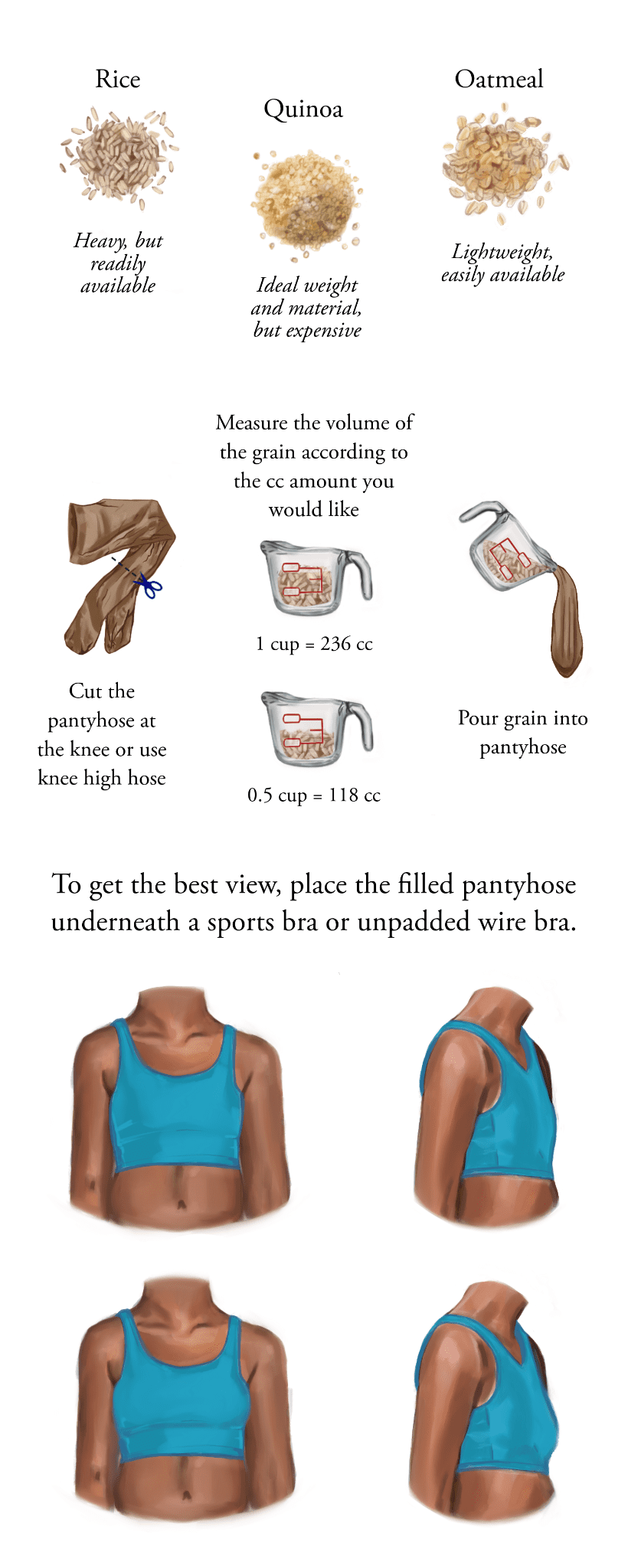
At the Gender Confirmation Center (GCC), we ask our patients to perform the rice test at home, prior to their surgical consultation. This will allow you to gain a practical sense of what each implant size will look like on your frame.
Implants are measured in cubic centimeters (cc), generally from 80-800cc per implant, not cup size. This is because implant volume alone does not determine cup size. The graphic below explains how you can use the rice test to determine which implant size would be best suited for you.
Preparing for Surgery
Proper preparation is essential for ensuring a smooth breast augmentation procedure and optimizing your recovery. Your surgeon will provide specific instructions, but here are some general guidelines:
Candidacy Requirements
The GCC only performs breast augmentation surgery on adult patients capable of partaking in the informed consent process. While we do not require that patients undergo HRT to qualify for surgery, many insurance providers do have an HRT requirement for covering gender-affirming breast augmentation.
The GCC does not have any requirements around BMI to be eligible for breast augmentation surgery at this time. That said, it is essential that patients disclose their medical history and any medical conditions they have to their surgeons. In some cases, we may need to make certain accommodations to ensure a patient’s health and safety. For example, patients with certain medical conditions may need to stay the night in the hospital after an operation.
Medical Clearance: Exams and Lifestyle Adjustments
Generally speaking, patients will need to stop smoking or consuming any form of nicotine at least three weeks before and after surgery to reduce complications like delayed wound healing. Likewise, patients will need to stop consuming alcohol at least 1 week before and 1 week after surgery.
Finally, 2-3 weeks prior to your surgery date, you mayneed to undergo laboratory tests to ensure your overall health and suitability for the procedure. Once pre-operative labs are clear, our medical team will send prescriptions to your pharmacy of your choice, where you can pick them up.
Paying for Surgery
All patients must pay their financial responsibility for surgery at least 6 weeks before their scheduled surgery date, or risk surgery cancellation. Trusted medical creditors like CareCredit can help patients finance these costs. There are also a variety of grant opportunities available for those who face financial hardships.
Patients going through insurance can benefit from our free insurance concierge service to help secure approval. Our team has a 90% success rate in securing coverage for insured patients, significantly reducing the costs of surgery. With insurance coverage, patients are also expected to pay any co-pay (if applicable) 6 weeks prior to surgery. For more information about this process, click here.
Getting Ready for the Recovery Process
Once you have a date scheduled for surgery, you will need to start preparing for your recovery process. If you are coming in from out-of-town, you can read our recommendations around travel and accommodations here. Most patients will take 1-2 weeks off work if they have a desk job or 6 weeks off work if their job involves heavy lifting. Information on soliciting time off work can be found here.
Patients should carefully review the recovery instructions prior to surgery to make sure they have everything they will need beforehand. For instance, breast augmentation patients will need ice packs, loose fitting shirts and their prescription medications ready for them when they are discharged from the hospital or surgical center. Likewise, patients will need a caretaker to pick them up from the hospital or surgical center and the help of loved ones to complete daily household chores for 1-2 weeks post-op.
The Days Leading up to Breast Augmentation Surgery
The Night Before Surgery
Patients should not eat or drink anything after midnight the night before surgery; however, you may drink clear liquids (water or gatorade) until 4 hours prior to surgery. Your stomach must be empty to decrease nausea and avoid anesthesia problems. When brushing your teeth, you may use mouthwash. Please ask your care team if you can take your routine medication with a sip of water the morning of or night before surgery.
If you will be staying overnight in the hospital, we recommend that you pack a bag with the clothing you will wear to the surgery facility, toothbrush, toothpaste and/or mouthwash. If you have any prescription medications, you should bring those to the hospital or surgical center as well. Additionally, if you wear contact lenses, eyeglasses or dentures, bring your cases with you, be sure your name is on the outside of their cases.
The Day of Surgery
The morning of surgery, you should not eat or drink anything. With the approval of your surgeon, you may take regular prescription medications with a small sip of water. These can include: blood pressure medications, thyroid medications, or birth control / hormone pills.
You may shower and wash your hair the morning before surgery, but do not set or spray it. Do not use facial or body moisturizer. You may shave your face and use aftershave lotion. We ask that you brush your teeth with minimal water and use mouthwash.
En route to the hospital or surgical center, we recommend that you wear flat shoes (preferably no laces) with traction to avoid slipping. You should not wear makeup, panty hose or girdles. In addition, please do not wear jewelry, earrings, rings, or hairpins, or false eyelashes. It’s best to leave all of these at home.
Please arrive in the admitting area of the hospital or surgery center two hours before your procedure is scheduled to begin, or when you have been directed. The surgery center staff will greet you and prepare you for surgery.
The Surgical Procedure
During transgender breast augmentation surgery, you will be under general anesthesia. The surgeon will make incisions, typically in the inframammary fold (breast crease), underarm, or periareolar area (around the nipple). They will then create a pocket behind the chest muscle or breast tissue to make room for implants before placing them. The incisions will be sutured closed with dressings placed on top. A compression garment will be placed over the chest before you are taken to a recovery area for monitoring. You will be discharged once you’re comfortable and awake from anesthesia.
Recovery and Aftercare
MTF breast augmentation typically takes 1 to 2 hours. Most patients return to work within 5 to 7 days, can resume light exercise at 2 weeks, and should expect swelling to fully resolve within up to one year. The recovery process following transgender breast augmentation can vary, but here’s a general timeline of what to expect:
- Week 1: Significant swelling, bruising, and discomfort. Pain medication may be taken and you’ll need to wear a surgical bra or compression garment.
- Week 2-4: Swelling and discomfort gradually subside. You may be able to return to light activities but should avoid strenuous exercise or heavy lifting.
- Week 6-8: Most swelling and bruising should have resolved, and you can gradually return to your normal routine, including exercise.
- 3-6 months: Final results become apparent as swelling fully subsides and the implants settle into their final position.
It’s crucial to follow your surgeon’s post-operative instructions carefully, including scar care, activity restrictions, and managing potential side effects such as pain, swelling, or infection.
Follow-Up Appointments
Attending follow-up appointments with your surgeon is essential for monitoring your progress and addressing any concerns or complications that may arise. Patients will need to follow up in our office 1-week after surgery to remove dressings or sutures. With your surgeon’s clearance, you may return home if you live outside of the San Francisco Bay Area.
In your follow-up appointments, your surgeon will evaluate your healing, provide guidance on scar management, and ensure that your results are progressing as expected. After the 1-week mark, subsequent follow up appointments can be held virtually. Be sure to attend all scheduled follow-up appointments and communicate any issues or concerns promptly.
FDA guidelines recommend ongoing monitoring with ultrasound or MRI following breast implantation — GCC’s team will guide you through the recommended follow-up schedule.”
FAQs
Will insurance cover breast implants for trans women?
Many insurance plans now cover gender-affirming breast augmentation when specific criteria are met — including documented gender dysphoria and 12 continuous months on HRT, unless a patient has a medical contradiction. GCC’s insurance concierge team has a 90% success rate of securing coverage for interested patients. Request a free consultation today to get started on your journey.
How long should I be on HRT before surgery?
At the GCC, we do not require patients to be on estrogen HRT to qualify for surgery. That said, since it can take 1.5-2 years for breasts to develop, we often advise patients on HRT to wait until their breast development to complete. Having more breast tissue above an implant can alter aesthetic outcomes.
How long do transgender breast augmentation results typically last?
Breast implants are not lifetime devices, and their lifespan can vary depending on factors such as the implant type and your body’s individual response. On average, most implants may need to be replaced after 10 years. Your surgeon will provide guidance on when and if implant replacement may be necessary.
Will I still have nipple sensation after transgender breast augmentation?
It is common to experience some temporary loss or alteration of nipple sensation following a breast augmentation. However, in most cases, sensation gradually returns over the course of the first year after surgery as the healing progresses. The extent of sensation recovery can vary from person to person and may depend on factors like smoking history, the surgical technique used and using nerve rehabilitation exercises at appropriate times during the healing process.
Can I breastfeed after transgender breast augmentation?
While it may be possible to breastfeed after transgender breast augmentation, the probability may be decreased and may depend on a number of factors such as the method or the location of implant (placement). Additionally, there may be concerns regarding potential contamination of breast milk with exposure to silicone implants.
What are the potential risks and complications of transgender breast augmentation?
As with any surgical procedure, transgender breast augmentation carries potential risks and complications, including infection, bleeding, scarring, implant rupture or malposition, capsular contracture (hardening around the implant), and adverse reactions to anesthesia. Your surgeon will discuss these risks in detail and provide guidance on minimizing their likelihood. For more information, click here.
Will my results look natural after transgender breast augmentation?
One of the primary goals of transgender breast augmentation that many patients express is to achieve symmetrical and natural-appearing results. What appears as “natural” differs between surgeons and patients, which is why we encourage patients to come in with a more concrete understanding of what results they would like to get from surgery. An experienced surgeon will use techniques such as appropriate incision and implant placement to create a “natural” breast appearance. However, it is important to have realistic expectations and understand that some visible scarring or asymmetry may occur, though these should be minimal with a skilled surgeon.
Do most trans women get breast augmentation?
Breast augmentation is one of the most commonly sought gender-affirming surgeries among transgender women, particularly for those who have not achieved their desired breast development through hormone therapy alone.
What is the recovery process like?
In the following two videos, Dr. Facque (he/him) explains what you can expect from recovering from a breast augmentation:
Click Here to Request the Next Steps to Schedule a Consult!
We offer complimentary virtual and in-person consultations with our board-certified surgeons. Click here to complete our consultation request form to learn more about the next steps in your patient journey.
BOOK CONSULTATION
Suite 1010, 450 Sutter St
San Francisco, CA 94108
Phone: (415) 780-1515
Fax: (628) 867-6510
GCC business hours are from 9:00 am to 4:00 pm
GCC phone hours are from 9:00 am to 4:00 pm
GCC phone hours are from 9:00 am to 4:00 pm
Board Certification
& Memberships
Copyright © 2023 GCC (Gender Confirmation Center). All Rights Reserved.