


Vaginoplasty Scars: Your Questions Answered
Medically reviewed by Jennifer Richman on December 23, 2025.
Questions and concerns about scarring after vaginoplasty are some of the most common we get from patients interested in bottom surgery. Like most surgeries, scarring is a normal and inevitable part of the process. However, there are various steps that patients can take to reduce the visibility––texture and decoloration––of their vaginoplasty scars if they would like.
If you are interested in a vaginoplasty, vulvaplasty or labiaplasty procedure, you can request a free consultation with Dr. Zara Ley (she/her/they). Dr. Ley is a trans woman of color, a board-certified plastic surgeon and a former patient herself.
Where Scars Form After Vaginoplasty & Vulvaplasty
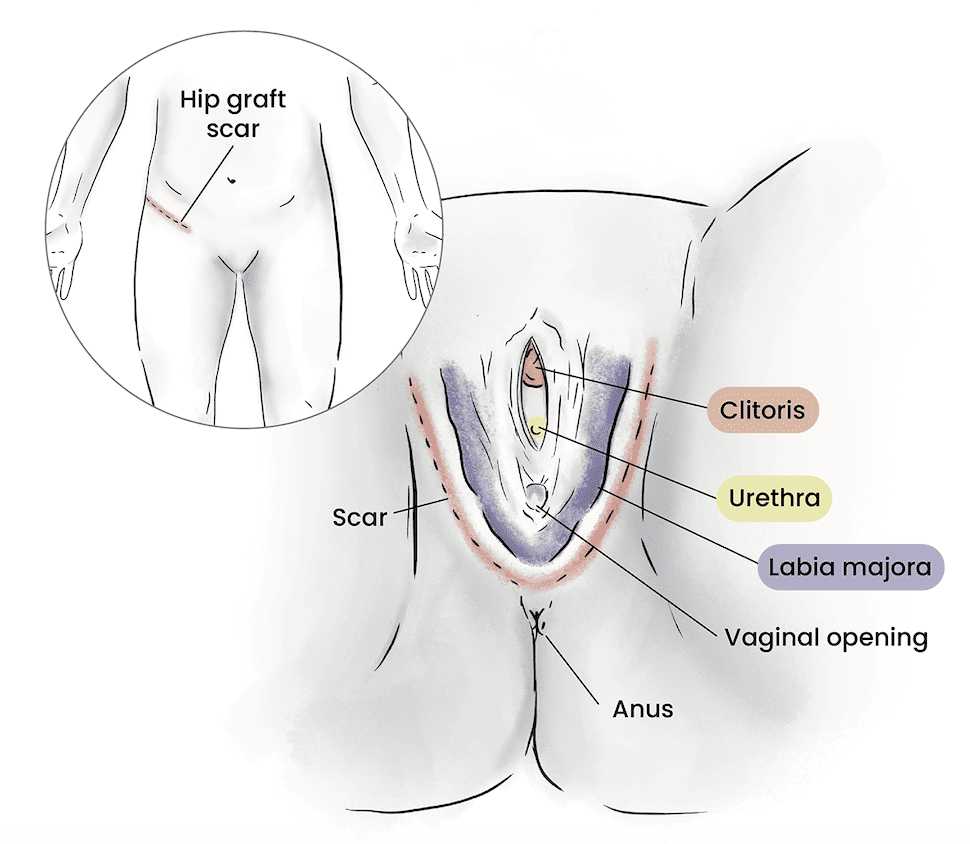
There are three primary locations where patients will to experience scarring after a penile-inversion vaginoplasty, vulvaplasty and labiaplasty procedure:
Scarring Around the Vulva
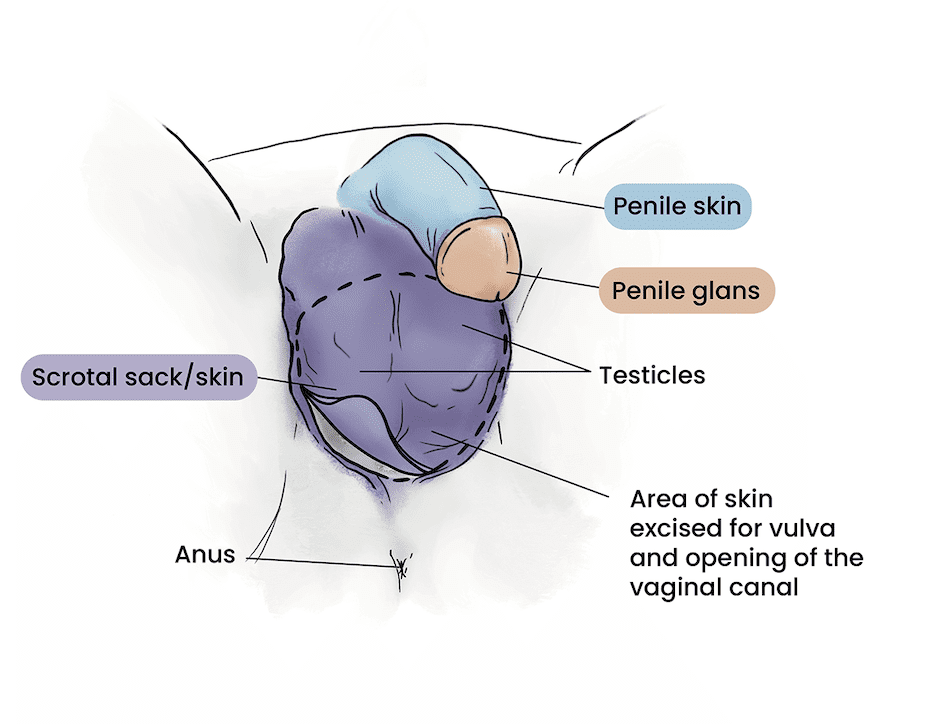
For any vaginoplasty procedure, an incision will be made to excise the scrotal pouch, as pictured below.
This incision will eventually be closed as the vulva is constructed, pictured below:
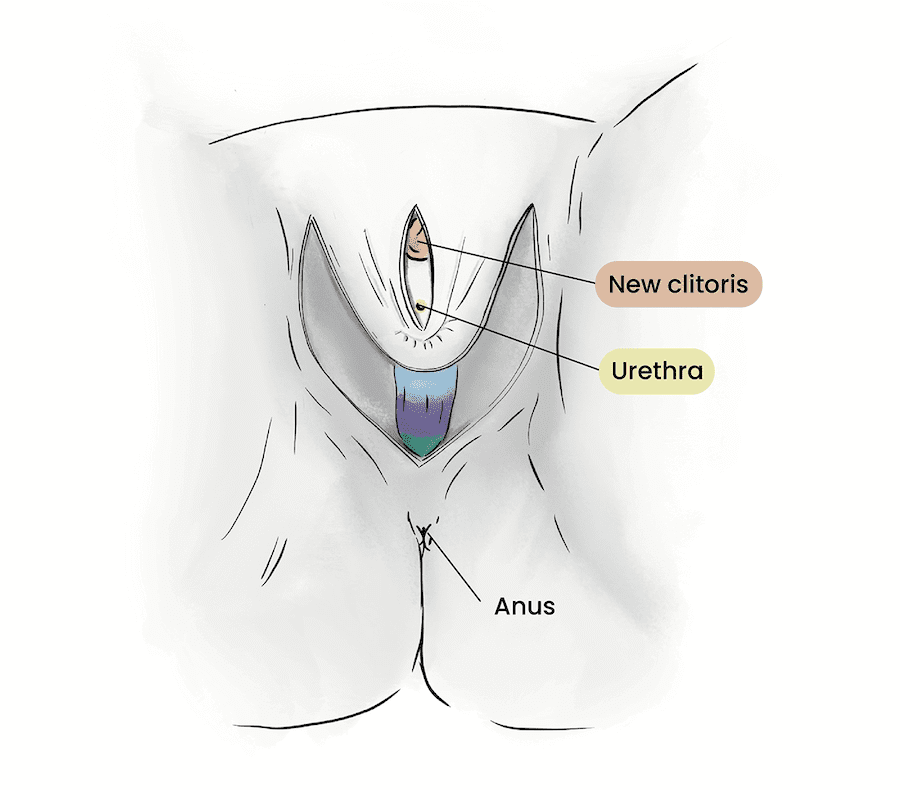
This creates a U-shaped scar around the vulva that goes around the labia majora and under the vaginal opening. Patients sometimes express that this scar blends in with the folds of the labia, whereas others feel that it is quite visible.
Scarring on the Hip
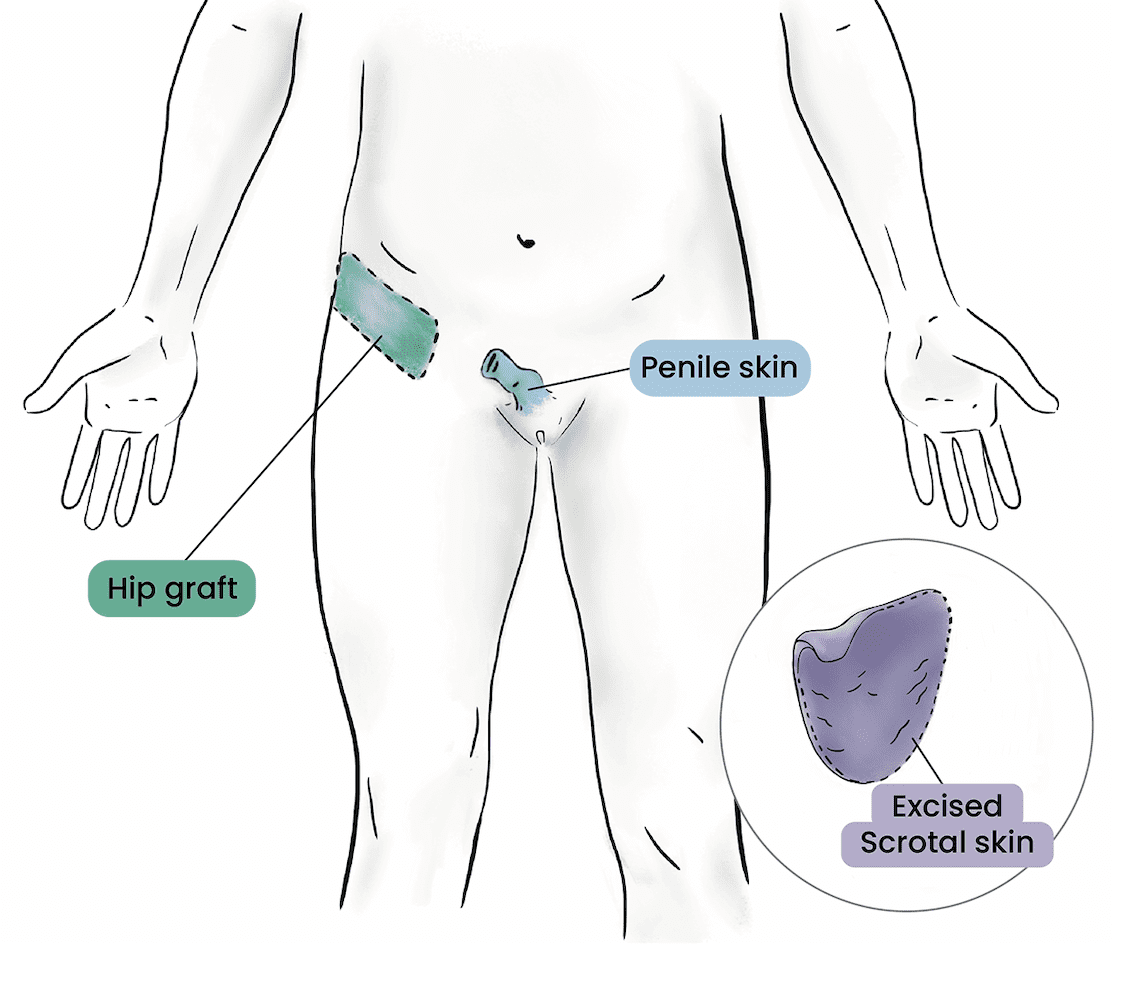
In some instances, Dr. Zara Ley (she/her/they), may take a skin graft from one or both sides of the hip to construct the vaginal canal alongside penile and scrotal skin. In the case that this skin graft is taken, a medium sized scar––a line approximately 3-6 inches in length––will be discretely tucked into the fold of the hip.
Scarring on the Labia
During a labiaplasty, your surgeon will refine the details of your vulva by constructing a labia minora from the labia majora, constructing a clitoral hood, and fixing any aesthetic or functional concerns you may have (e.g., asymmetry, chaffing, etc.).
During this procedure, incisions will be made along the labia. However, scars are concealed into their folds, rendering them practically invisible.
Scarring Complications
For genetic and other factors, some patients are pre-disposed to certain scarring complications. These include:
- Keloid scars are thick, raised, rope-like scar formations that extend beyond the incision site.
- Hypertrophic scars have a thick, ropy texture as a result of tissue buildup or fibrosis. They are slightly raised and red, but do not spread out as much as keloid scar tissue does.
- Hypopigmented scars are more common amongst patients with richer or darker skin tones. These scars have a lighter color or less melanin than the surrounding skin.
- Hyperpigmented scars are scars that have a deeper color than the surrounding tissue.
Reducing the Appearance of Your Scars
Scarring is a normal and inevitable part of a vaginoplasty. Patients have diverse feelings about their visibility after surgery. For patients who are interested in reducing the texture and discoloration of their scars, the following home care and treatment options may help.
Prevention
If you currently smoke, avoiding tobacco use for at least 3-6 weeks before and after surgery is one of the easiest ways to improve your body’s healing response.
Topical Treatments and Scar Care
About 3 weeks after your procedure, with your surgeon’s approval, you can start massaging your scars. Massaging the scar on your hip and around your vulva can reduce texture and discoloration by breaking down fibrosis. We recommend that patients massage their scars with Bio oil during the first three months after surgery.
Additionally, silicone scar therapy creates a moist environment that prevents excessive collagen buildup. Patients can apply silicone scar cream consistently to the scar around their vulva and on their hip starting at about 3 weeks after surgery, with your surgeon’s approval.
Additional Treatments
Steroid injections can reduce inflammation and help flatten raised scars like keloids. Retinoids, such as tretinoin, are also beneficial as they promote skin cell turnover and enhance the texture of scars. Please check in with your surgeon’s office to see what options would be best for your specific case. At the Gender Confirmation Center (GCC), we have in-office steroid injection treatment.
Revision Surgery
Surgical treatment may enhance the appearance or functionality of scars when other methods haven’t achieved the desired results. Surgery can significantly enhance the appearance of wide or raised scars by blending them with the surrounding skin tone and texture. Scars tend to heal better when they are excised alone because the body is not also trying to heal from another surgery, like a vaginoplasty, simultaneously. Likewise, when scars are excised and new scars are created, patients have a new chance at caring for their scars to reduce their visibility.
 Facebook