


Dilation After Vaginoplasty: Your Questions Answered
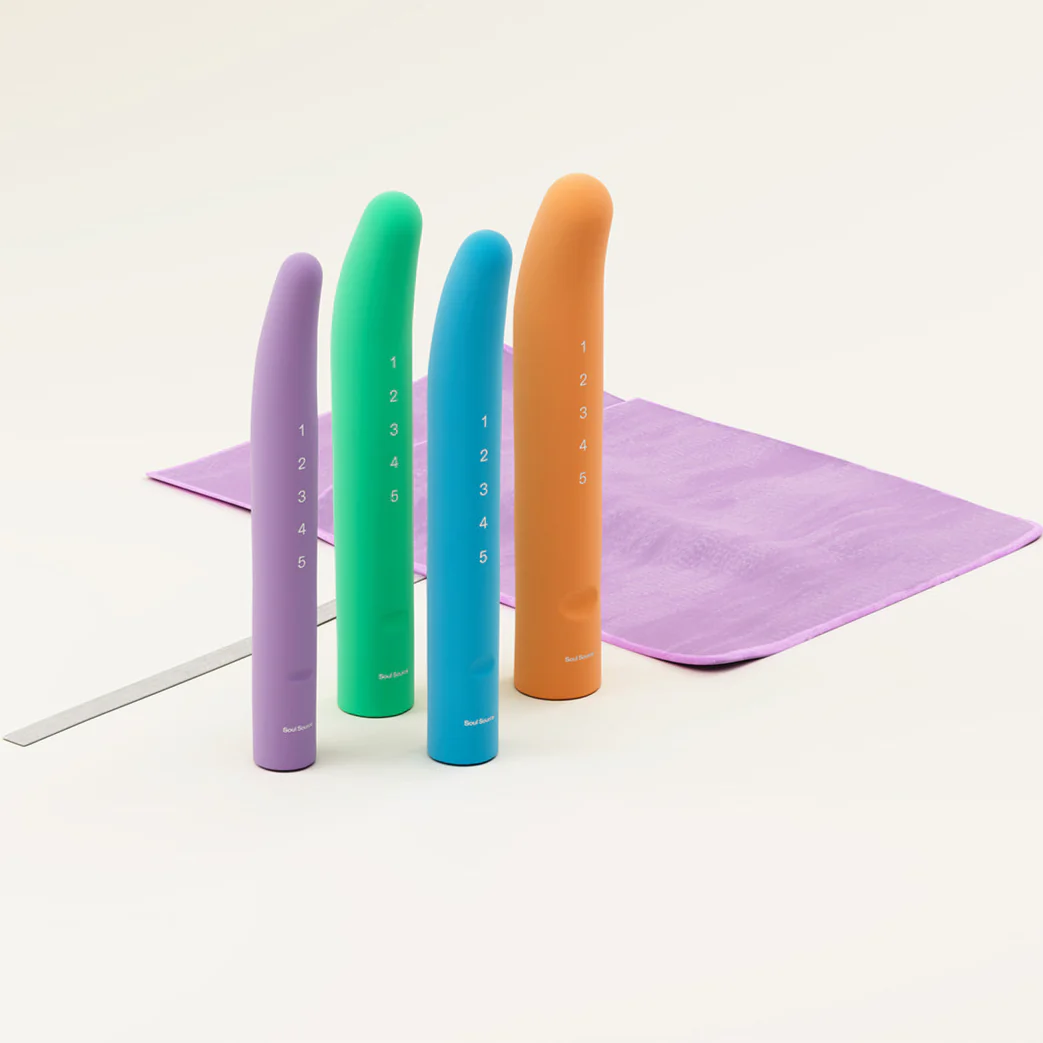
Soul Source Gender Reassignment Surgery (GRS) Pelvic Trainers
Medically reviewed by Dr. Zara Ley on January 20, 2026.
Vaginal dilation is not just an essential part of recovery for the first year after gender-affirming vaginoplasty, it is a life-long commitment. Dilation prevents the vaginal tissue from scarring up and keeps the vaginal canal from shrinking or even closing up completely––called vaginal stenosis. Dilation is necessary in the long-term to maintain vaginal depth and width.
If you are interested in undergoing vaginoplasty or a vaginal deepening/widening revision surgery, you can request a free consultation with Dr. Zara Ley (she/her/they): a transgender woman, board-certified surgeon and former patient herself.
When do Patients Start Dilating?
When you wake up from your vaginoplasty procedure, your vaginal canal will be packed with gauze. About a week after surgery, you will have your first post-operative appointment with a member of your care team.
Dilation begins the day of your first postoperative appointment. The purpose of this appointment is to monitor your healing, remove stitches and dressings, introduce you to dilation and answer any questions you may have about recovery. Here, we will show you how to dilate.
Keep In Mind When You Start Dilating…
Although patients often experience gender euphoria as soon as they wake up from surgery, from having a vagina, it is common to experience feelings of discomfort when you start dilating. Dilation will start out as a foreign experience for your body. It is normal for lots of emotions to come up. This is especially the case because dilation may be painful for the first month or two. Deep breathing and pain management can help you manage discomfort during this initial stage of dilation.
How Frequently & For How Long Will I Need to Dilate?
Dilation sessions should take 15 minutes, in addition to clean-up before and after. Dilation may take longer at first if patients need to take more time to breathe and relax the pelvic floor muscles through pain and discomfort.
The Importance of Consistency
Maintaining a strict dilation regimen during the first year after surgery is especially important to your recovery long-term. Dilation must be done consistently, following the schedule given to you by the care team. Be mindful of the fact that during the first year, you should not skip days.
Keep in mind that pain during dilation will reduce as time goes by. It’s important to dilate even if you experience pain. You can talk to your care team about how to manage pain if you are having difficulties.
Dilation Schedule
- Post-op appointment to 1 month: Dilation 4 times a day
- Months 2-6: Dilation twice a day
- Months 7-12: Dilation once a day
- 12 months and on: This is an ongoing dynamic and fluid stage. The need for dilation may be anywhere between once a week to once a month.
What Materials Will I Need?
At the Gender Confirmation Center (GCC), dilation supplies are included in the surgical costs that patients pay no later than 6 weeks before surgery. These include:
- Dilators: a set of 4 different sizes
- Lubricant: water-based lubricant
- Douching supplies: Douching supplies are provided to patients with instructions
Additionally, we recommend that patients purchase:
- Additional lubricant: additional water-based lubricant. Nothing other than water based lubricant can be used for the first 6 months post op. Then patients can try almond oil, which we only recommend if they are having issues with water-based lubricant. No silicone lubricant should be used until at least 1 year post-op.
- Small, hand-held mirror: this can help you navigate dilating.
- Pads: this can help you to not dirty the area you are dilating on
Dilator Sizes
Your dilator kit will have four dilators of different sizes. Each dilator will have numbers 1-5.; these will help you monitor your depth..
When you start dilating at the first post-op appointment, you will begin with the smallest size. Your care team will let you know when you can move on to each size, every two weeks. Some patients do not find it necessary to move up to the final and largest size in the set. However, we do require our patients to move up to the third largest size in the provided set, color green.
Instructions:
- Step 1 – Cleaning: You will wash your dilator and your hands with soap and water beforehand. Place a towel or pad under where you will be dilating.
- Step 2 – Preparations: Sit in a comfortable position, ideally on a bed. Patients can lie down flat on their back, although most prefer to lie at a 45º angle, with pillows supporting their back and thighs. This latter position allows greater visibility when using a small, hand-held mirror.
- Step 3 – Lubricant: Place lubricant, starting on the tip of your dilator up to the last number.
- Step 4 – Pelvic floor breathing: Take deep breaths down to your pelvic floor to help you relax. Relaxing your pelvic floor will be crucial for dilating. This will help you navigate pain & discomfort.
- Step 5 – Mirror: With the help of a mirror, open your labia to find your vaginal opening.
- Step 6 – Insertion: When you insert your dilator, the curved tip should face up, pointing toward your navel; this is to follow the natural curve of your vaginal canal. The dilator does not go straight in at first, but curves around the urethral bulb due to the positioning of the vaginal opening.
- Step 7 – Reaching the end: You should maintain gentle inward pressure up to the end of the vaginal canal. Once you have reached your full depth, start a timer for 15 minutes. Each dilation will be 15 minutes, at full depth.
- Step 8 – Removal: Slowly take the dilator out.
- Step 9 – Cleaning: Wash your hands and dilators with soap and water.
Pelvic Floor Therapy After Vaginoplasty
Generally speaking, the pain and discomfort that patients experience with dilation goes down over time. This kind of tension can sometimes be a normal response to continued stress, holding for long periods of time to go to the bathroom, negative feelings about one’s genitals or the trauma of surgery.
For patients struggling with moving up in size or continued dilation, we can refer you to pelvic floor physical therapy. Pelvic floor therapy is especially necessary when patients experience difficulties in dilation. This includes being unable to fully insert the dilators or experiencing continued tension and a hard time loosening the pelvic floor muscles.
 Facebook