

Forehead Feminization Surgery: FFS Brow Bone Reduction
Medically reviewed by Jennifer Richman on April 27, 2026.
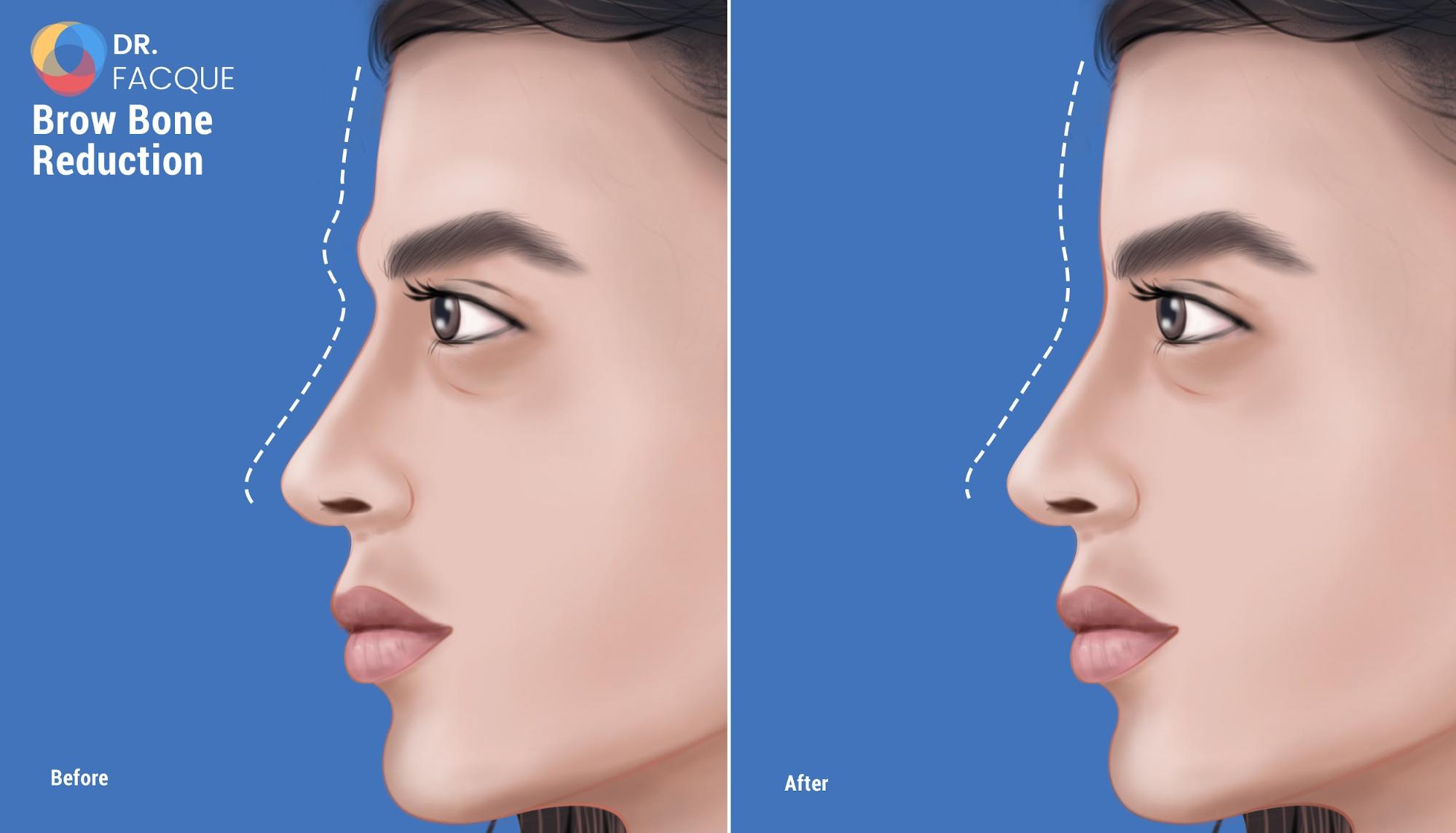
At the Gender Confirmation Center (GCC), our surgeons offer a series of procedures as a part of forehead feminization surgery: temple feminization, orbital bone shaving, and a frontal sinus setback. A facial feminization surgery (FFS) forehead reduction flattens the brow bone ridge, giving the forehead a flatter contour. This reverses one of the effects of a first, testosterone dominant puberty on cranial development. Many of our patients experience gender dysphoria as a result of a protruding brow bone.
Forehead feminization creates the effect of more visible, rounded eyes in addition to lifted eyebrows. If you are interested in undergoing this procedure as a part of your FFS, you can request a free consultation here.
What is Forehead Feminization Surgery?
FFS Brow reduction surgery is a procedure that permanently alters the forehead by softening and flattening an eyebrow ridge. This surgery is often performed in conjunction with orbital contouring. Together, these two procedures reduce a protruding brow bone, which creates the effect of more visible, rounded eyes and lifted eyebrows. These surgeries are also known as:
- Forehead feminization
- Forehead reduction
- Frontal sinus setback
- Brow bossing reduction surgery
- Forehead cranioplasty
- Orbital bone shaving
- Orbital bone contouring
- Orbital bone bossing
- Temple feminization
- Eyebrow bone reduction surgery
Before surgery, your surgeon will order a CT scan or x-ray of your cranium to determine which technique would be most apt to feminize your forehead given your unique anatomy.
Surgical Techniques
To support patients who experience gender dysphoria related to a protruding brow bone, the following procedure options are available. If you request a forehead feminization as a part of your FFS during your free consultation with a board-certified surgeon, we will later determine which procedures will be most appropriate to achieve this result for you.
Frontal Sinus Setback Surgery
For most individuals who seek a brow bone reduction surgery, the brow bone itself is too thin to be fully shaved down, since it sits in front of a sinus cavity. In this case, the front wall of the frontal sinus can be removed, contoured, and then secured back in place using titanium or absorbable plates and screws to flatten the forehead. In medical terms, this is called a setback, alluding to the procedure name “frontal sinus setback.”
Brow Bone Bossing Reduction Surgery
In a small number of people, about 4-5% of the population, the front wall of the frontal sinus is thick enough that it can be shaped to achieve the desired effect without being removed or “set back”. This is called frontal bone contouring.
Orbital Bone Surgery
Our surgeons often combine brow bone reduction surgery with reshaping the supraorbital ridge (the bones of the eye socket) to help feminize the eye shape. Orbital bone contouring surgery can help make the eyes appear more open and rounded, which is more typical of the eye shape created during a first, estrogen-dominant puberty. Reshaping the orbital bones also allows for greater lifting of the brows for patients who want that done as well.
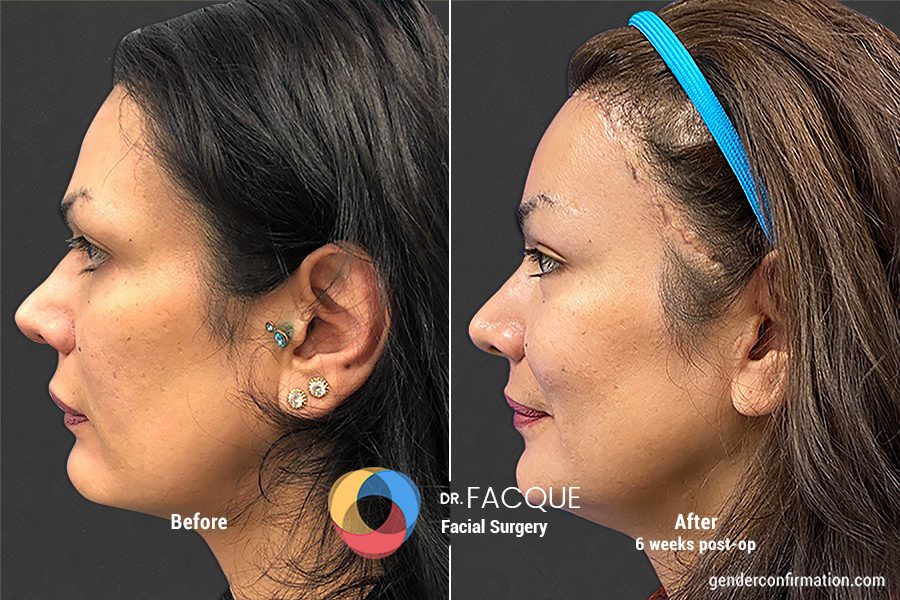
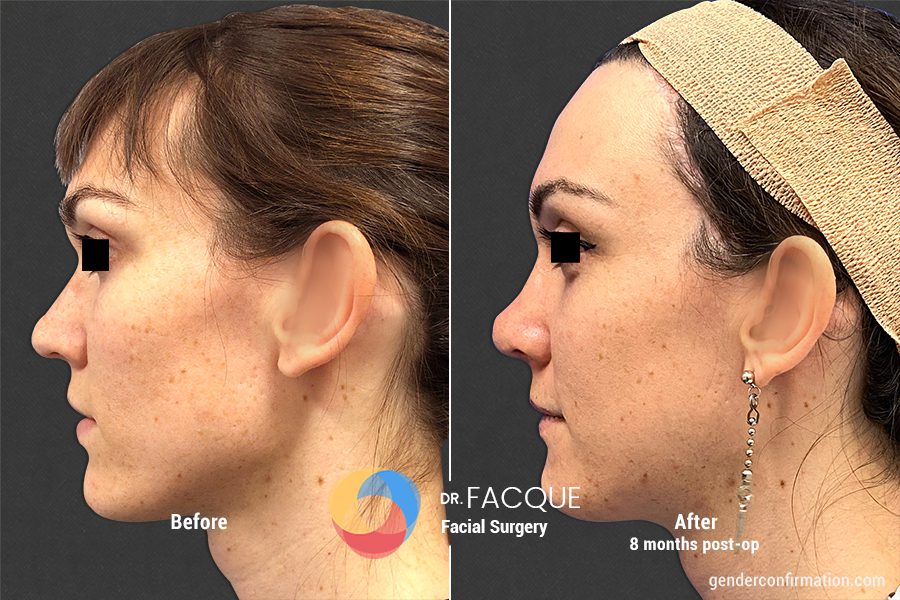
Brow Bone Reduction Before & After
Here are some of the brow bone reduction results from our board-certified surgeons. You can schedule a free consultation for surgery here.
Benefits of FFS Brow Bone Reduction
Several peer reviewed studies have shown that FFS has tremendously positive impacts on patients quality of life and self-esteem because of its ability to eliminate some causes of gender dysphoria. What often brings patients satisfaction, peace, confidence and euphoria after a frontal sinus setback is seeing a face that is more aligned with their internal sense of self. Generally speaking, it is one of the most immediately gratifying procedures since it is one of the sites on the face where inflammation resolves the fastest––meaning that feminizing results are visible relatively quickly.
Who is a Candidate for Brow Reduction Surgery?
At the Gender Confirmation Center, Dr. Ley (she/her/they), Dr. Facque (he/him) and Dr. Wes (he/him) use informed consent standards to determine patient eligibility for facial surgery. This means that adult patients can make the decision to undergo surgery once they have been educated on the advantages and risks involved in the procedures.
HRT and Support Letters
Though our practice does not require therapist support letters or hormone replacement therapy (HRT) as prerequisites for FFS, many insurance providers do. For more information on obtaining a support letter from a licensed mental health professional, click here.
If you are currently taking estrogen HRT, we recommend that you wait 1-1.5 years on treatment before considering facial surgery. This is merely a suggestion, not a requirement. Given that HRT alters the soft tissues and overall appearance of the face, patients’ goals for surgery may differ after they see these changes. Still, HRT will not affect bones, meaning that a protruding brow ridge will likely not lose prominence after HRT.
Expert Video: Forehead Feminization Surgery at the GCC
In the following video, Dr. Facque (he/him) gives a summary of the hairline advancement and a frontal sinus setback procedures:
Complications, Risks and Candidacy
Like any surgery, FFS carries a small risk of complications. Undergoing surgery with a qualified board-certified surgeon with hospital privileges–can help ensure your safety and the integrity of your results. That said, one of the most common long-term effects of this procedure is that patients lose a small amount of sensitivity on the scalp behind where the incision is made.
Due to health and safety issues, you may not be a good candidate for surgery if you have any of the following conditions or may need to take some time to optimize your medical conditions before pursuing facial surgery:
- Heavy smoker, drinker, or drug user
- Uncontrolled diabetes
- Uncontrolled high blood pressure
- Bleeding or clotting disorders
- Significant lung or heart disease
- Active sinus infections
- Previous facial trauma, sinus surgeries, etc.
Please openly and honestly discuss your medical history with your surgeon so they can help make a plan that is safe for you.
- Consultation and Planning: The first step to undergoing FFS is requesting a surgical consultation. At the GCC, our consultations are free of charge. During this time, you can discuss your medical history, have any questions about surgery answered and create a surgical plan by going over your goals and expectations.
- Pre-Operative Preparations: First, you will either receive a quote for your procedure or begin the process of soliciting pre-approval authorization from your insurance provider. Second, once a date for your surgery has been scheduled, you will be sent pre-operative instructions including medical exams to do before surgery such as a CT scan or X ray of your skull.
- Anesthesia Options:A frontal sinus setback is always performed under general anesthesia. This means that you will be completely unconscious for the duration of the surgery. As a result, you will need to discontinue herbal supplements and blood thinning medications at least a week before surgery to prevent anesthesia-related complications.
- Surgical Techniques: An FFS brow reduction is performed by first making an incision at the hairline or over the top of the scalp. The hairline incision leaves a small scar at the top of the forehead, but allows the surgeon to simultaneously perform a brow lift and hairline advancement. Since there is a sinus cavity behind the brow bone, it most often cannot be shaved down directly. Rather, it will be removed and contoured alongside the orbitals. It will then be set back in with titanium plates and screws, which will not set off metal detectors.
- Duration: PPerforming this procedure typically takes 2–3 hours. That said, your FFS will likely last longer if you also undergo procedures like a rhinoplasty, jaw contour and/or Adam’s Apple reduction.
Pre-Operative Instructions
- As a FFS brow reduction patient, you will need to complete an x-ray or CT scan of your cranial bones before surgery. This will allow your surgeon to have a more precise idea of the kind of contour and bone excision that needs to be made for the procedure. Our team can help GCC patients order and complete this test.
- Please note that you will need to stop consuming alcohol at least a week before and after surgery. Tobacco consumption and smoking of any kind should be suspended at least four weeks before and after facial surgery. Likewise, you may be asked to temporarily stop taking estradiol (estrogen hormone therapy) two weeks before FFS to reduce the risk of blood clots. You may receive other specific instructions from your surgeon.
- It is important that you set up a care plan for the first week of recovery before you go under anesthesia. Please note that you will only be discharged from the hospital once you have a support person present to pick you up, since you will not be able to operate a vehicle. Likewise, you will need 24/7 care for the first 72 hours after surgery to help you ice your wounds, take medications on time and thereby manage pain and swelling.
Surgical Techniques
Frontal Sinus Setback Surgery
To support patients who experience dysphoria related to a protruding brow bone, in some individuals, the front wall of the frontal sinus can be removed and then secured back in place in a way that the forehead appears flatter. In medical terms, this is called a setback, alluding to the procedure name “frontal sinus setback.”
Forehead Reduction
In a small number of people, about 4-5% of the population, the front wall of the frontal sinus is thick enough that it can be shaped to achieve the desired effect without being removed. This is called frontal bone contouring. Before surgery, your surgeon will order a CT scan of the patient’s facial bones to help determine which type of surgery is needed for any given individual.Orbital Bone Bossing
Our surgeons often combine this procedure with reshaping the orbital bones (the bones of the eye socket) to help feminize the eye shape as well. This can help make the eyes appear more open and rounded, which is more typical of the eye shape created during a first, estrogen-dominant puberty. Reshaping the orbital bones also allows for greater lifting of the brows for patients who want that done as well.Complications, Risks, and Candidacy
Like any surgery, FFS carries a small risk of complications. Undergoing surgery with a qualified board-certified surgeon with hospital privileges can help ensure your safety and the integrity of your results. One of the most common long-term effects of this procedure is that patients lose a small amount of sensitivity on the scalp behind where the incision is made.
FFS Forehead Reduction Recovery
Healing Timeline
If your job does not require heavy lifting, you will likely be able to return to work two to three weeks after surgery. The most difficult phase of the recovery process lasts two weeks, although patients should not lift heavy weights or engage in rigorous exercise until at least six weeks have passed. Likewise, any impact sports may need to be avoided for longer.
Please note that while the majority (around 80%) of swelling should revolve in the first 3 months after surgery, you may not see your final FFS results until 12 months after surgery. We encourage you to practice patience and self-compassion as your body works hard to heal over time. It may take a while for your face to settle after such an invasive procedure. That said, unlike other procedures such as mandible contouring, its results are often visible during the first week of recovery, making it one of the more immediately gratifying procedures for our patients.
Aftercare Tips
Keep the surgical site clean and follow wound care instructions. This involves placing antibiotic ointment over incisions and using cotton swabs with saline water to break up any crusting here.
- You will be taking prescription pain medications during the first few days after surgery to manage pain. You cannot operate a vehicle or consume alcohol at this time. /li>
- During the first 72 hours post-op, you will need to place ice over the surgical sites for 20 minutes every hour. Use a towel over the ice packs or frozen vegetables to prevent ice burns. Your surgical sites will be temporarily numb while nerves regenerate, so you may not be able to feel an ice burn when it comes on. After the 72 hour period, you should continue icing your face around 4 times a day for two weeks.
- You will be on sinus precautions for the first 6 weeks after surgery. During this time, you should avoid sneezing whenever possible, blowing your nose, or adding any other pressure to your sinuses. You can resolve nasal dripping by wiping your nose, not blowing it.
- You will need plenty of rest during the first two weeks and should avoid household chores or activities. Elevating your head while you rest will help manage inflammation.
Aftercare Tips
- Keep the surgical site clean and follow wound care instructions. This involves placing antibiotic ointment over incisions and using cotton swabs with either hydrogen peroxide or saline water to break up any crusting here.
- You will be taking prescription pain medications during the first few days after surgery to manage pain. You cannot operate a vehicle or consume alcohol at this time.
- During the first 72 hours post-op, you will need to place ice over the surgical sites for 20 minutes every hour. Use a towel over the ice packs or frozen vegetables to prevent ice burns. Your surgical sites will be temporarily numb while nerves regenerate, so you may not be able to feel an ice burn when it comes on. After the 72 hour period, you should continue icing your face around 4 times a day for two weeks.
- You will be on sinus precautions for the first 6 weeks after surgery. During this time, you should avoid sneezing whenever possible, blowing your nose, or adding any other pressure to your sinuses. You can resolve nasal dripping by wiping your nose, not blowing it.
- You will need plenty of rest during the first two weeks and should avoid household chores or activities. Elevating your head while you rest will help manage inflammation.
The Cost of Brow Reduction Surgery
Typical Costs
It is uncommon for this procedure to be performed alone. A brow bone reduction is typically accompanied by a brow lift and/or a hairline advancement. Cash-pay patients, meaning those who are paying for surgery without insurance, can expect a quote for the upper-third of the face to come out to $10,000-$50,000. This cost estimate may not include anesthesiology or facility fees and will vary from patient-to-patient. Likewise, the costs of post-operative medications and some supplies will not be included in your surgery quote.
Insurance Coverage
Yes, many insurance providers we work with will cover a brow bone reduction surgery for trans women and trans feminine non-binary patients. The patient will need to provide a support letter from a licensed mental health professional and be on feminizing HRT for at least a year to qualify for coverage.
Financing Options
Many patients who are not able to get insurance to cover the surgery look into grants and trusted medical creditors to help them finance the procedure. We have compiled trusted resources on this page. At the GCC, all patients must pay their financial contribution in-full no later than six weeks before surgery or they risk getting their procedure cancelled.
Frequently Asked Questions About Brow Reduction
How painful is the recovery?
A frontal sinus setback is one of the more painful procedures to recover from because it involves removing bone, contorting it, and setting it back into the skull with titanium plates and screws. Swelling in the face can be distressing, especially if swelling around the eyes causes a harder time opening and closing the eyes. Patients will be given prescription pain medications to manage pain for the first few days, before switching to over-the-counter medications. Most pain should subside after the first two weeks so long as the patient does not overexert themself.
Are the results permanent?
Yes, the results of this surgery are life-long.
Will there be visible scars?
This depends. If your surgeon creates the incision for this procedure along the hairline, there will be a faint scar at the top of the forehead. Patients that are worried about visible scarring and do not want a hairline advancement can opt for the incision to be made entirely through the scalp. This way, the patient’s hair will cover the scar. Small amounts of hair loss can be expected along incision lines.
How long before I can resume work or exercise?
If your job does not require heavy lifting or other taxing physical exertion, you can return 2-4 weeks after surgery. Otherwise, you will need to wait 6 weeks to take up strenuous activities again.
Click Here to Request the Next Steps to Schedule a Consult!
We offer complimentary virtual and in-person consultations with our board-certified surgeons. Click here to complete our consultation request form to learn more about the next steps in your patient journey.
BOOK CONSULTATION
Suite 1010, 450 Sutter St
San Francisco, CA 94108
Phone: (415) 780-1515
Fax: (628) 867-6510
GCC business hours are from 9:00 am to 4:00 pm
GCC phone hours are from 9:00 am to 4:00 pm
GCC phone hours are from 9:00 am to 4:00 pm
Board Certification
& Memberships
Copyright © 2023 GCC (Gender Confirmation Center). All Rights Reserved.