


Inverted-T Top Surgery: Preserving Sensation and Volume
Medically reviewed by Briana Smith on March 23, 2026.
What is Inverted T Top Surgery?
The inverted T or anchor top surgery technique is used for breast reduction for cis women and non-binary patients, as well as gender-affirming chest reconstruction for trans masculine folks.
What Makes the Inverted T Technique Different?
An Inverted T top surgery most often leaves some volume of chest tissue behind. Patients have about an 80% chance of maintaining heightened nipple sensitivity after surgery.
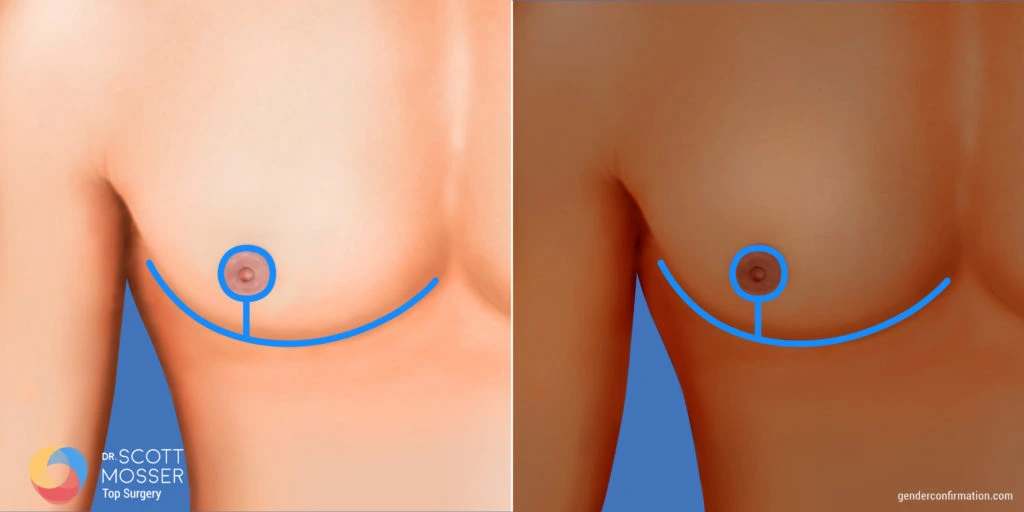
The technique gets its name because it leaves behind an upside-down T or anchor-shaped scar that goes from the nipple to the base of the pectoral muscle.
How is This Accomplished?
The inverted-T or anchor incision for chest reconstruction or breast reduction, like the buttonhole incision, has the potential to preserve heightened or erotic nipple sensation. This is accomplished through the preservation of a mound of tissue under the nipple that we call the pedicle. The pedicle is estimated to contain enough of the original blood and nerve supply to keep the nipple-areolar complex alive.
Patients can speak with their surgeon in a free consultation about how much volume they would like to preserve after this surgery.
Why do Patients Choose This Technique?
Generally speaking, there are two factors that draw patients to the inverted T incision for top surgery:
- An interest in having a non-flat top surgery result. This could mean a chest with some volume left behind or an aggressive breast reduction.
- Maintaining heightened sensitivity in the nipples after surgery. Other procedures that have a similar probability of maintaining high sensitivity include the buttonhole, periareolar and double incision nerve innervation technique.
Flatness vs. Volume: Inverted T vs. Double Incision
Patients who are deciding between a double incision and inverted T technique often are weighing the following factors:
- How flat they would like their chest to be after surgery
- Whether maintaining heightened nipple sensitivity is a major priority
Maintaining some chest volume can be a question of gender presentation for some folks. For others, chest volume is a question of keeping their chest proportional to the rest of their body. If a patient would like a completely flat top surgery result, a double incision technique is preferable to an inverted T incision.
Inverted T top surgery is more recommendable for patients that are ok with having less visible pectoral muscle definition. That is because the leftover pedicle tissue and/or fat will slightly conceal the chest muscles below.
Sensation & Nipple Grafting: Inverted T vs. Double Incision
Besides flatness, another advantage of the double incision technique is that it allows patients to undergo nipple grafting. This means that the dimensions and position of the nipples and areolas can be manipulated more precisely by the surgeon. However, sensitivity in the nipples will lower after surgery, meaning that nipples are expected to have the same level of tactile sensation in them as the top of their chest.
Patients who would like (1) a flatter result with nipple grafts, (2) while maintaining heightened sensation, no longer have to choose between these two options. Patients can undergo a nerve innervation or nerve grafting procedure, which involves connecting the grafted nipples to original nerves. Both the inverted T and nerve innervation procedures have about an 80% chance of success.
Please note that less insurance providers cover nerve innervation as a part of gender-affirming top surgery. This means that patients who choose to undergo this procedure instead of an Inverted T may have extra out-of-pocket costs.
Scarring: Inverted T vs. Periareolar Top Surgery
For some patients, minimal scarring is a priority after top surgery. However, minimal scarring procedures like the periareolar incision are only available to patients with minimal amounts of tissue that need to be removed.
Who Qualifies for Inverted T Top Surgery?
At the Gender Confirmation Center of San Francisco and Prosilio Care in Pasadena, our care team uses the informed consent method for adult patients. The Inverted T technique can be used on patients with varying levels of skin elasticity, and medium to large amounts of initial tissue.
At the GCC and Prosilio Care, being on hormone replacement therapy (HRT) or having a certain body mass index (BMI) are not eligibility requirements for top surgery.
However, Patients with a BMI >60 may not receive approval to proceed with surgery based on safety concerns and functional limitations that may make it difficult to properly ventilate, i.e., provide adequate air to the lungs, during surgery. Our surgeons and medical team can work with you to explain the process and determine how best to proceed.
Preparing for Surgery
Preparing for inverted T top surgery involves several important steps:
- Consultation: The first step to initiating your top surgery journey is scheduling a consultation with a board-certified surgeon. At the GCC, all of our consultations––whether virtual or in-person––are free of charge to patients. This is an opportunity to discuss your medical history, goals for surgery and get any specific questions you have answered by a surgeon.
- Medication and Supplement Adjustments: Certain medications, supplements, and herbal remedies may need to be discontinued temporarily to minimize anesthesia complications, bleeding risks and optimize healing. Please let your surgeon know in your consultation which medications and supplements you are currently taking.
- Arrange for Support: Plan for post-operative care and assistance, as you may require help with daily activities during the initial recovery period. During your first three weeks post-op, you will not be able to lift more than 5 lbs nor will you be able to lift your arms above your shoulders. For this reason, we recommend that you have support people help you with everyday tasks.
The Procedure:
The inverted T top surgery typically takes 2-3 hours under general anesthesia to complete; this depends on patient anatomy and the individual surgical plan. Surgery generally follows these steps:
- Anesthesia: The procedure is performed under general anesthesia to ensure your comfort and safety.
- Incisions: The surgeon will make incisions around the areola and a vertical incision extending downward from the areola, forming an inverted “T” shape when closed.
- Tissue Removal and Sculpting: Excess breast tissue and skin are carefully removed, and the remaining tissue is sculpted to create the desired chest contour.
- Nipple Repositioning: The nipple and areola complex is repositioned to a more masculine location on the chest. The nipple and areola complex stays attached to the pedicle during an inverted T top surgery without nipple grafts, so repositioning will be somewhat limited by the tethering of the tissue to the pedicle.
- Closure: The incisions are meticulously closed with sutures or surgical adhesives, and dressings are applied to protect the surgical site.
Recovery & Aftercare:
For more detailed recovery instructions, click here. The recovery period after inverted T top surgery can vary, but generally, you can expect the following:
- Immediate post-op: discomfort, swelling, and bruising are normal; pain medication and surgical site care instructions will be provided
- Drainage tubes: temporary drains may be placed to prevent fluid buildup (seroma), particularly when liposuction is done or larger tissue amounts are removed. Link to the drains page.
- Activity restrictions: no lifting over 5 lbs, no raising arms above shoulders for 3 weeks; no showering or bathing until dressings and drains are removed at first post-op appointment (approximately 6–8 days after surgery); sponge baths are permitted in the meantime
- Scar management: massage and silicone-based topical treatments typically begin around 3 weeks post-op
- Follow-up appointments: patients from out of town must stay until the first post-op appointment (6–8 days after surgery)
Final Aesthetic Results
Inverted T Top Surgery Scars: What They Look Like and How They Heal
The Inverted T leaved behind three scars:
- Around the areolas (these tend to blend in with the pigment and become invisible)
- A vertical line from the areola to the scar on the bottom of the pectoral
- A horizontal line that extends across the lower chest fold
Scar Placement: Double Incision vs Inverted T
The double incision sometimes leaves the possibility of scars that are less visible or more tucked away. The inverted-T leaves an extra, more visible, vertical scar between the areola and the inferior incision. Additionally, with regards to scar placement, the lower curvature of the incision is not as customizable by the surgeon because it has to be located in the lower chest fold. In other words, the surgeon cannot customize the horizontal incision as much as they could with the double incision approach.
The Inverted T vs. the Buttonhole Incision
First, the inverted-T, as opposed to the buttonhole, is recommended in patients with greater amounts of breast tissue and/or excess skin to remove. The vertical incision made between the areola and the lower, horizontal incision is what allows for excess skin removal and is the only factor that differentiates this procedure from a buttonhole. Second, the inverted-T tends to result in more teardrop shaped results, whereas the buttonhole procedure leaves a more moundlike shape.
Cost and Insurance
Generally speaking, chest reconstruction top surgery costs can vary from $8,500 – $11,500, in addition to other associated costs such as facility fees. Patients who are able to secure coverage for an inverted T procedure as a gender-affirming surgery can significantly reduce the costs of top surgery.
Insurance providers that cover top surgery tend to not require that patients undergo hormone replacement therapy (HRT) to be eligible for coverage. However, supplying a support letter from a licensed mental health professional is a requirement. At the Gender Confirmation Center and Prosilio Care, our insurance concierge team has a 90% success rate in securing coverage for interested patients.
Click Here to Request the Next Steps to Schedule a Consult!
We offer complimentary virtual and in-person consultations with our board-certified surgeons. Click here to complete our consultation request form to learn more about the next steps in your patient journey.
BOOK CONSULTATION


Suite 1010, 450 Sutter St
San Francisco, CA 94108
Phone: (415) 780-1515
Fax: (628) 867-6510
GCC business hours are from 9:00 am to 4:00 pm
GCC phone hours are from 9:00 am to 4:00 pm
GCC phone hours are from 9:00 am to 4:00 pm
Board Certification
& Memberships

Copyright © 2023 GCC (Gender Confirmation Center). All Rights Reserved.