


Revisions after Chest Reconstruction Top Surgery
Medically reviewed by Dr. Alex Facque on October 27, 2025.
Top Surgery Revisions and Candidacy
At the Gender Confirmation Center (GCC), only about 4% of our top surgery patients have concerns that require a revision surgery to solve. Whether a revision procedure is necessary is entirely up to the individual patient. Every patient has unique gender-embodiment goals and standards for what they need surgery to accomplish for them. At the GCC, no concern is too big or too small.
Whether or not you had your initial top surgery with us, you can request a free in-person or phone consultation with our surgeons in San Francisco or Pasadena. In a consultation, a board-certified surgeon can help you determine if what you need to address your concern is a revision surgery or another type of medical treatment. For example, treatments instead of surgeries can help address concerns like hematomas, mobility issues, abnormal experiences of pain, or ingrown hairs and cysts.
Types of Top Surgery Revision Procedures
The following are concerns that patients request revision procedures for:
- Dog ears: Puckering or protrusion of tissue at the start or end of a scar
- Nipple and areola concerns: Individuals may want to address symmetry, position and/or projection of the nipple-areolar complex.
- Nipple graft necrosis: In rare occasions, patients experience tissue death or necrosis of part or all of a nipple graft. Revisions can help to restore more normal appearing anatomy
- Scar complications: Patients that have exaggerated or discolored scars may wish to have their scars excised so that they may heal better after a revision.
- Contouring concerns: Sometimes individuals would like to improve the contour of their chest so it is more aligned with their personal surgical goals. It is also possible to increase or decrease the amount of fullness present in the chest.
Requesting, Scheduling and Payment
You can undergo a revision procedure with the same surgeon you had your initial top surgery with, or with another board-certified provider. You can request a free consultation here with one of our surgeons if you are interested in a revision to your top surgery results.
At the GCC, if you request a revision procedure within the first 12 months after your initial surgery, we will waive the surgeon’s fee. Generally speaking, if your insurance covered your initial top surgery procedure, they will likely also cover the revision surgery.
Scar Revisions: Surgical and Non-Surgical Options
Scar complications include scars that are raised, thick and/or uneven, such as hypertrophic or keloid scarring. Some patients are not bothered by visible scarring and even take pride in their scars as a symbol of their gender-affirmation or transition process. Meanwhile, other patients prefer to have their scars as discreet and unnoticeable as possible.
Generally, as a first line of defense to scar complications, we recommend post-operative treatments like steroid injections or microneedling therapy to reduce the visibility of widened, textured and discolored scars. If a patient is not satisfied with the results of these treatments, they can have their initial scars excised, creating new scars that will often heal better.
Nipple Revision Techniques for Top Surgery Patients
There are a variety of reasons as to why a patient may want to undergo a revision to their nipples post-op. Here, we go over common concerns and techniques for restoring nipples after top surgery to help patients meet their gender embodiment goals.
Composite Nipple Graft to Correct the Position and Dimensions of Nipple-Areola Complex
For this type of revision, your surgeon will modify the dimensions of your areolas and/or nipples and attempt to reposition them according to your preferences. Depending on the extent of the surgery, you may need to follow nipple graft care instructions in your recovery.
Nipple reconstruction to Correct Nipple Graft Tissue Death
On rare occasions, after top surgery, the nipple-areolar complex is unable to properly reconnect to a blood supply, causing partial or complete tissue death to the nipple-areola complex. This tissue death is called necrosis, and is most commonly identified by the tissue changing in color to a dark brown, blue or black.
When nipple-areola tissue experiences necrosis, your surgeon can excise it and replace it with a skin graft from another part of the body: most often the groin because of the flexibility of the skin. This can be combined with a nipple recreation technique called a CV flap or skate flap, which involves taking a 2D flap of skin and folding it in on itself to create a projected nipple.
Medical Tattooing as an Alternative to Surgery
Medical tattooing by a trusted, trained tattoo artist can help patients cover scars, recolor the nipple-areola complex, or tattoo on a 3D-appearing nipple-areola complex over chest skin. We strongly recommend that patients wait until 12 months after surgery to undergo medical tattooing to their chest. The reason to wait is this long to allow for any changes in skin position to occur so that the nipple position is less likely to become asymmetric after tattooing.
For nipples, top surgery patients often undergo medical tattooing for the following motives:
- If a nipple reconstruction and skin graft reconstruction technique is used, an experienced medical tattoo artist can add pigmentation to the graft so that the colors match with your other nipple.
- To change the size and shape of the areolas.
- An experienced medical tattoo artist can create the appearance of 3D areolas and nipples for patients that did not want to undergo nipple grafting in their original surgery.
Top Surgery Revision Before & After Photos
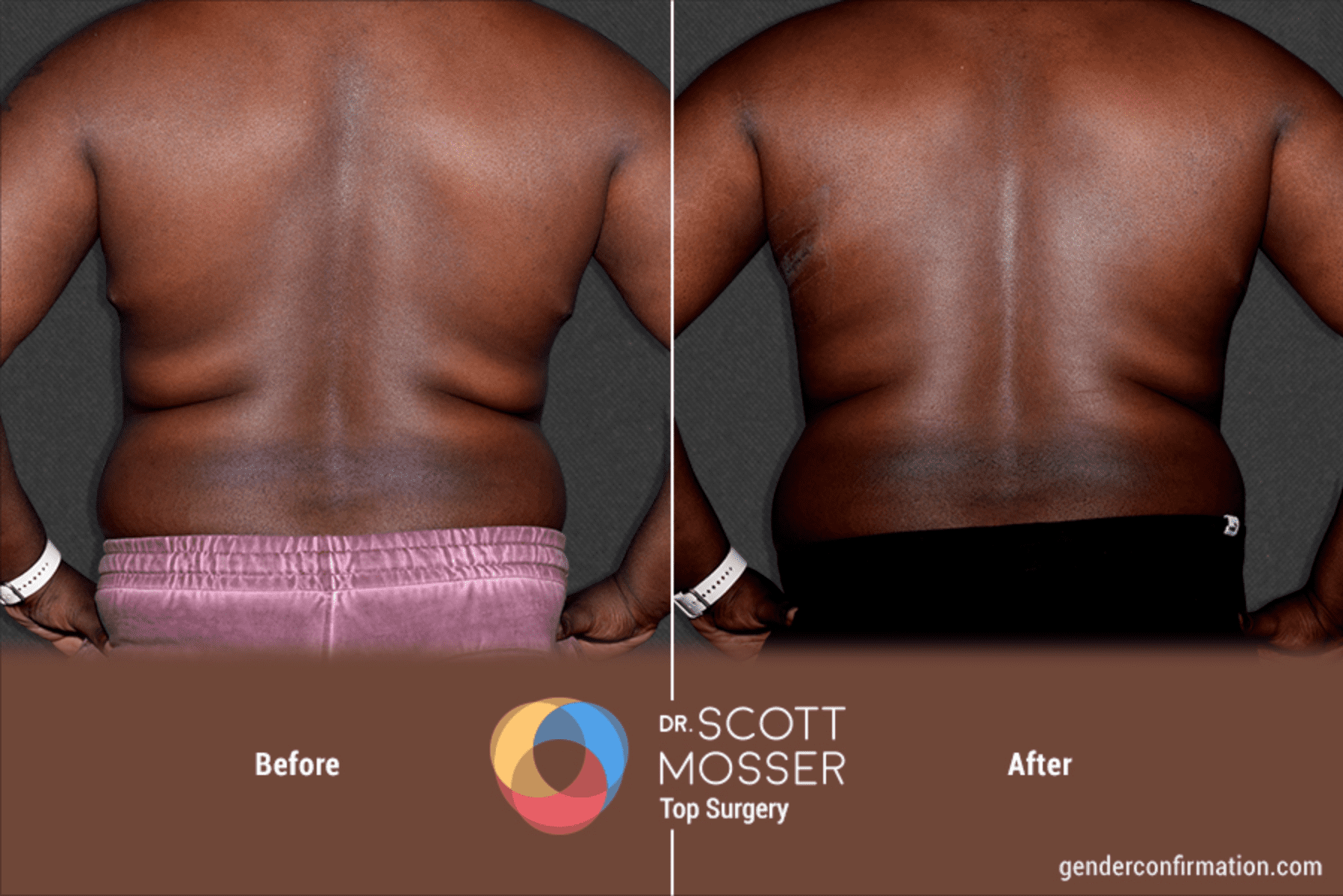
Dog Ears Revision Surgery
A dog ears removal is the most common type of revision procedure for top surgery. It can be performed under local or general anesthesia.
Chest Contour & Nipple Revision Surgery
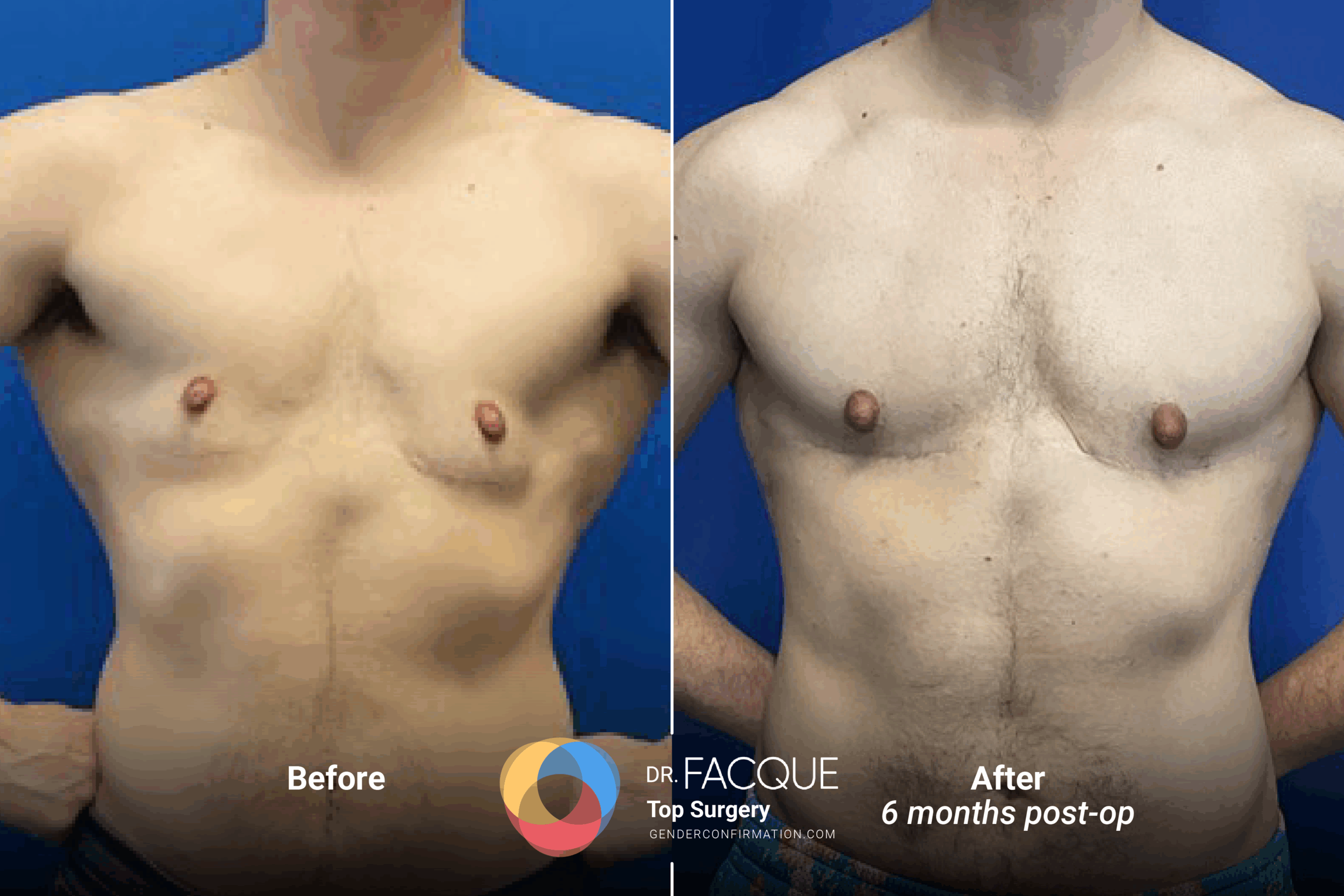
This patient requested a revision of their buttonhole top surgery to make nipple position more symmetrical and fix their concerns about the chest’s contour (one pectoral had excess tissue left over & the other other had hollow contour at bottom).
Scar Revision Surgery
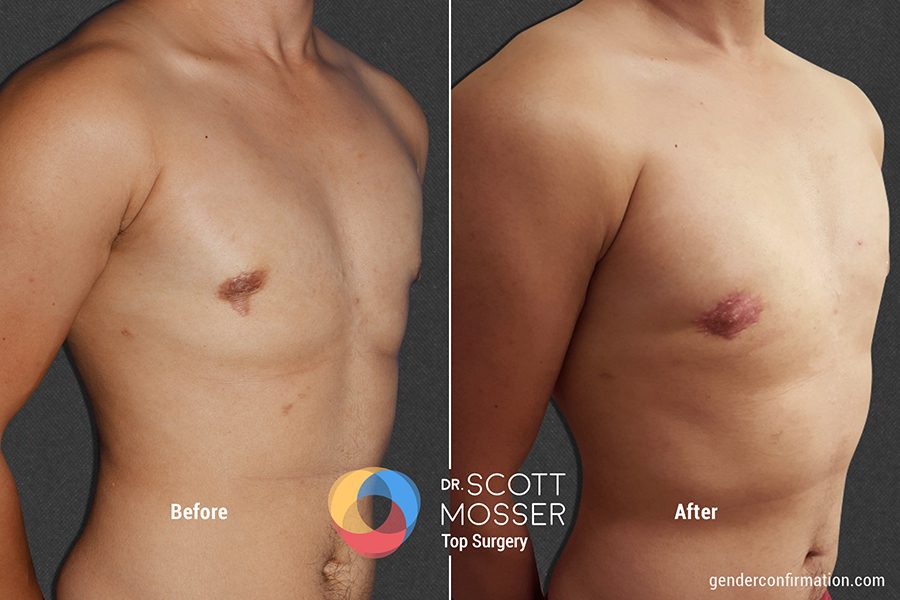
This periareolar patient underwent a revision procedure to reduce the visibility of their scars.
Click Here to Request the Next Steps to Schedule a Consult!
We offer complimentary virtual and in-person consultations with our board-certified surgeons. Click here to complete our consultation request form to learn more about the next steps in your patient journey.
BOOK CONSULTATION


Suite 1010, 450 Sutter St
San Francisco, CA 94108
Phone: (415) 780-1515
Fax: (628) 867-6510
GCC business hours are from 9:00 am to 4:00 pm
GCC phone hours are from 9:00 am to 4:00 pm
GCC phone hours are from 9:00 am to 4:00 pm
Board Certification
& Memberships


Copyright © 2026 GCC (Gender Confirmation Center). All Rights Reserved.